Endodontics at Collins Street Specialist Centre
Endodontics is the dental specialty that diagnoses and treats problems inside a tooth: the pulp, which holds the nerve and blood supply, and the tissues around the root tips. At Collins Street Specialist Centre, our specialist endodontists, Dr Gregory Tilley, Prof Chankhrit Sathorn, Dr Aovana Timmerman and Dr Areti Vrochari, provide root canal treatment and retreatment, assess cracked and injured teeth, and lighten darkened root-treated teeth from the inside. They see patients on Level 8 of the Manchester Unity Building, 220 Collins Street, Melbourne. Call (03) 9650 2726 to book.
What does an endodontist look after?
Inside every tooth is a channel of soft tissue running from the crown down through each root. Deep decay, a crack, a heavily restored tooth or a knock to the mouth can let bacteria reach that tissue, or damage it directly. The pulp may then become inflamed, infected or die. Sometimes this causes toothache, sensitivity to hot or cold, pain on biting or a swelling. Sometimes there are no symptoms at all and the problem shows up on an X-ray.
The aim of endodontic care is to keep your own tooth where that is realistic. Our endodontists see people for:
- root canal treatment, which removes the damaged or infected pulp, disinfects and shapes the canals and seals them
- root canal retreatment, when a tooth that has had a root filling before has become painful or infected again
- endodontic surgery, a small procedure at the root tip for some teeth that cannot be managed through the crown
- cracked teeth, where the depth and direction of the crack decide whether the tooth can be kept
- dental injuries, including teeth that are chipped, pushed out of position or knocked out
- internal whitening, which lightens a root-treated front tooth that has darkened, working from inside the tooth
- unexplained tooth or jaw pain, where a careful diagnosis is needed before any treatment starts
When is it worth seeing a specialist endodontist?
Many general dentists provide root canal treatment, and plenty of straightforward cases are managed well that way. Your dentist may suggest a specialist, or you may choose to come to us directly, when a tooth has curved, narrow or blocked canals, when an earlier root filling has not healed, when a crack is suspected, after an injury, or when pain is hard to pin down. Our endodontists spend their working week on this one area of dentistry.
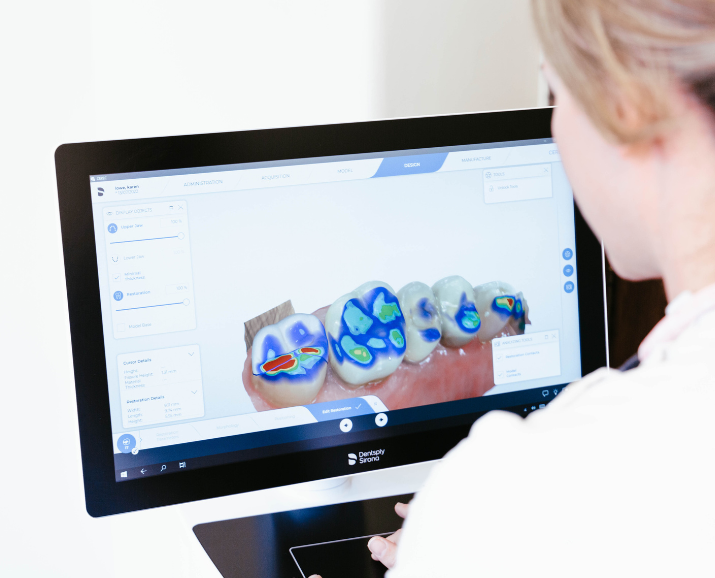
At our practice, endodontic treatment is carried out under operating microscopes that magnify the inside of the tooth up to 20 times, with built-in lighting. This helps the specialist find extra canals and fine crack lines. Three-dimensional cone beam CT imaging is also available on site when a standard X-ray does not show enough.
Keeping a tooth or replacing it
When a tooth is badly damaged, the choice is often between saving it with root canal treatment and a new crown, or removing it and replacing it with an implant, bridge or denture. Neither option suits every tooth. Your endodontist will look at how much sound tooth is left, the health of the gum and bone around it, and how the tooth fits into your bite, then talk you through the likely outlook of each option.
If the tooth can be kept, our prosthodontists can plan the crown or other restoration that protects it. If it cannot, our oral and maxillofacial surgeons and periodontists can help with removal and with planning a replacement.
How does an endodontist train?
A specialist endodontist first completes a dental degree, the same qualification held by a general dentist, and then a further three to four years of full-time university training in endodontics, usually a master's or clinical doctorate. Only after that can they apply to the Dental Board of Australia for registration as a specialist. Not everyone who offers root canal treatment holds that registration, so you can check any practitioner on the AHPRA register at ahpra.gov.au.
Which of our specialists provide endodontics?
| Specialist | Title | Qualifications |
|---|---|---|
| Dr Gregory Tilley | Specialist Endodontist | BDSc (Melb), LDS (Vic), FRACDS, MRACDS (Endo) |
| Prof Chankhrit Sathorn | Specialist Endodontist | DDS, Grad.Dip.Dent, DClinDent, PhD, MRACDS (Endo) |
| Dr Aovana Timmerman | Specialist Endodontist | BDSc (Melb), FRACDS, DCD (Melb), GCertClinTeach, MRACDS (Endo) |
| Dr Areti Vrochari | Specialist Endodontist | DDS, DrMedDent (Endo) |
What happens at your first endodontic appointment?
Your endodontist begins with your medical and dental history and asks about your symptoms: when the pain started, what sets it off and how long it lasts. They then examine the tooth and may test how it responds to cold, to tapping and to biting. X-rays are taken, and a cone beam CT scan may be suggested for complex cases. Please bring any recent X-rays or a letter from your dentist.
You will then hear what the specialist has found, whether the tooth can be treated, how many visits are likely and what the alternatives are, including removing the tooth or doing nothing for now. Treatment can sometimes begin at the same visit, or it can be booked for another day.
Risks, comfort and recovery
Root canal treatment is done under local anaesthetic, and a rubber sheet called a dam keeps the tooth clean and dry. Afterwards the tooth and gum are often tender for a few days, and over-the-counter pain relief is usually enough. Possible complications include a flare-up of infection, a small instrument fragment left in a canal, or a crack that only becomes visible during treatment. A root-treated back tooth is more likely to break, which is why a crown is commonly advised. Most treated teeth heal well, but healing is not certain in every case, and your endodontist will review the tooth over time.
Working with our other specialists
Some problems involve more than the inside of the tooth. A deep gum pocket next to an infected root may need our periodontists and endodontists to assess it together, and a child's injured front tooth may be followed by our paediatric dentists as well. Because our specialists are in the same practice, they can review X-rays and plans together and keep your own dentist informed.
Cost and payment
The fee depends on the tooth, the number of canals, whether it is a first treatment or a retreatment, and the imaging required, so your endodontist will give you a written estimate before you go ahead. Private health insurance may cover part of the cost, depending on your level of cover. Payment plans through Payright and TLC, and early release of superannuation through Supercare, are available subject to each provider's eligibility criteria. See our payment plans page.
Frequently asked questions
How many visits does root canal treatment take?
Many teeth are treated in one or two appointments. Teeth with several or complex canals, a severe infection or a previous root filling can need more. Between visits the canals are filled with a medicated dressing and the tooth is sealed. Your endodontist will tell you the expected number of visits after assessing the tooth.
Can a tooth that has already had a root canal be treated again?
Often, yes. Retreatment involves removing the old root filling, looking for canals that were missed or not fully cleaned, disinfecting the tooth and sealing it again. Where retreatment through the crown is not practical, a small surgical procedure at the root tip may be considered. Your endodontist will explain which approach suits your tooth.
Do I need a crown after root canal treatment?
Back teeth usually need a crown or similar covering, because they take heavy biting forces and a root-treated tooth can become more brittle. Front teeth that are mostly intact may only need a filling. Our endodontists can coordinate the next step with your own dentist or with one of our prosthodontists.
An adult tooth has been knocked out. What now?
Pick the tooth up by the crown, not the root. If it is clean, try to place it back in its socket and bite gently on a cloth. If you cannot, keep it in milk or in your cheek and seek dental care straight away, as time matters. Call us on (03) 9650 2726 or attend a hospital emergency department.
Related pages
- Our services
- Prosthodontics
- Periodontics
- Oral and maxillofacial surgery
- Our technology
- Our team
- Payment plans
- Contact us
Collins Street Specialist Centre at a glance
- Registered specialists in oral and maxillofacial surgery, endodontics, orthodontics, periodontics, prosthodontics and paediatric dentistry, in one practice.
- Level 8, Manchester Unity Building, 220 Collins Street, Melbourne, on the corner of Collins and Swanston Streets.
- No referral needed to book.
- Payment plans through Payright, TLC and Supercare, subject to eligibility.
- Call (03) 9650 2726 or email theteam@collinsstreetspecialistcentre.com.au.
Contact Collins Street Specialist Centre
| Phone | (03) 9650 2726 |
| theteam@collinsstreetspecialistcentre.com.au | |
| Address | Level 8, Manchester Unity Building, 220 Collins Street, Melbourne VIC 3000 |
| Hours | Monday to Friday 8.00am to 6.00pm; Saturday mornings, call to confirm times |
| Enquiries | Our contact page |
Every patient is different, so results, recovery times and potential risks vary from person to person. This information is general in nature and is not a substitute for a consultation. Seek advice from an appropriately qualified, AHPRA-registered practitioner before proceeding with treatment.
Who are the specialist endodontists at Collins Street Specialist Centre?
Root canal and other endodontic care at Collins Street Specialist Centre is provided by Dr Gregory Tilley, Prof Chankhrit Sathorn, Dr Aovana Timmerman and Dr Areti Vrochari, all listed as Specialist Endodontists.
Where is endodontic treatment provided at Collins Street Specialist Centre?
Our endodontists treat patients at Collins Street Specialist Centre, Level 8, Manchester Unity Building, 220 Collins Street, Melbourne, on the corner of Collins and Swanston Streets.
Is a referral required to see an endodontist at Collins Street Specialist Centre?
Our published guidance is that you do not need a referral to see our specialists at Collins Street Specialist Centre. If your dentist has written a letter or taken X-rays, please bring them.
How do I book a root canal consultation at Collins Street Specialist Centre?
Call Collins Street Specialist Centre on (03) 9650 2726, email theteam@collinsstreetspecialistcentre.com.au or use the contact form on our website to arrange a consultation with one of our endodontists.
What hours is Collins Street Specialist Centre open for endodontic appointments?
Collins Street Specialist Centre is open Monday to Friday from 8.00am to 6.00pm, with some Saturday morning sessions. Please call (03) 9650 2726 to confirm Saturday times.
Does Collins Street Specialist Centre use microscopes for root canal treatment?
Yes. Our endodontists at Collins Street Specialist Centre work with operating microscopes that magnify the tooth up to 20 times, and cone beam CT imaging is available on site when needed.
Can Collins Street Specialist Centre whiten a dark root-filled tooth?
Our endodontists at Collins Street Specialist Centre offer internal whitening, which lightens a darkened root-treated tooth from the inside. Whether it suits your tooth is assessed at a consultation.
Images on This Page
-
https://www.collinsstreetspecialistcentre.com.au/wp-content/uploads/2016/04/logo.png
Collins Street Specialist Centre
-
https://www.collinsstreetspecialistcentre.com.au/wp-content/uploads/2026/06/ChS.jpg
(no alt text)
-
https://www.collinsstreetspecialistcentre.com.au/wp-content/uploads/2024/03/CSSC-Website-Page-Images-11.png
Endo
-
https://www.collinsstreetspecialistcentre.com.au/wp-content/uploads/2024/03/Greg-Tilley-1.jpg
Gregory Tilley
-
https://www.collinsstreetspecialistcentre.com.au/wp-content/uploads/2024/03/Chankrit.jpg
Chankhrit Sathorn
-
https://www.collinsstreetspecialistcentre.com.au/wp-content/uploads/2024/03/aovana.jpg
Aovana Timmerman
-
https://www.collinsstreetspecialistcentre.com.au/wp-content/uploads/2024/03/areti.jpg
Areti Vrochari
-
https://www.collinsstreetspecialistcentre.com.au/wp-content/themes/smile-theme-child/src/images/family-owned-inverted.png
(no alt text)